

In today’s business world, data has become a top priority across all areas of the organization. It is the backbone of today’s businesses, no matter which business everyone needs the right amount of data in order to make certain decisions.
And in order to do all that efficiently, data needs AI to be his perfect partner in order to help it transform the way data analysis is done. By taking help of Artificial Intelligence, businesses can easily automate many of their tasks which are mostly repetitive, process a lot of data faster and also uncover different areas or insights which might be unreachable for human eyes.
Below are top 5 AI-Powered data analytics platforms:
- Microsoft Power BI with AI Capabilities
- Tableau with Einstein AI
- Google Looker with AI and BigQuery ML
- IBM Cognos Analytics
- Qlik Sense with AI and AutoML
1. Microsoft Power BI with AI Capabilities
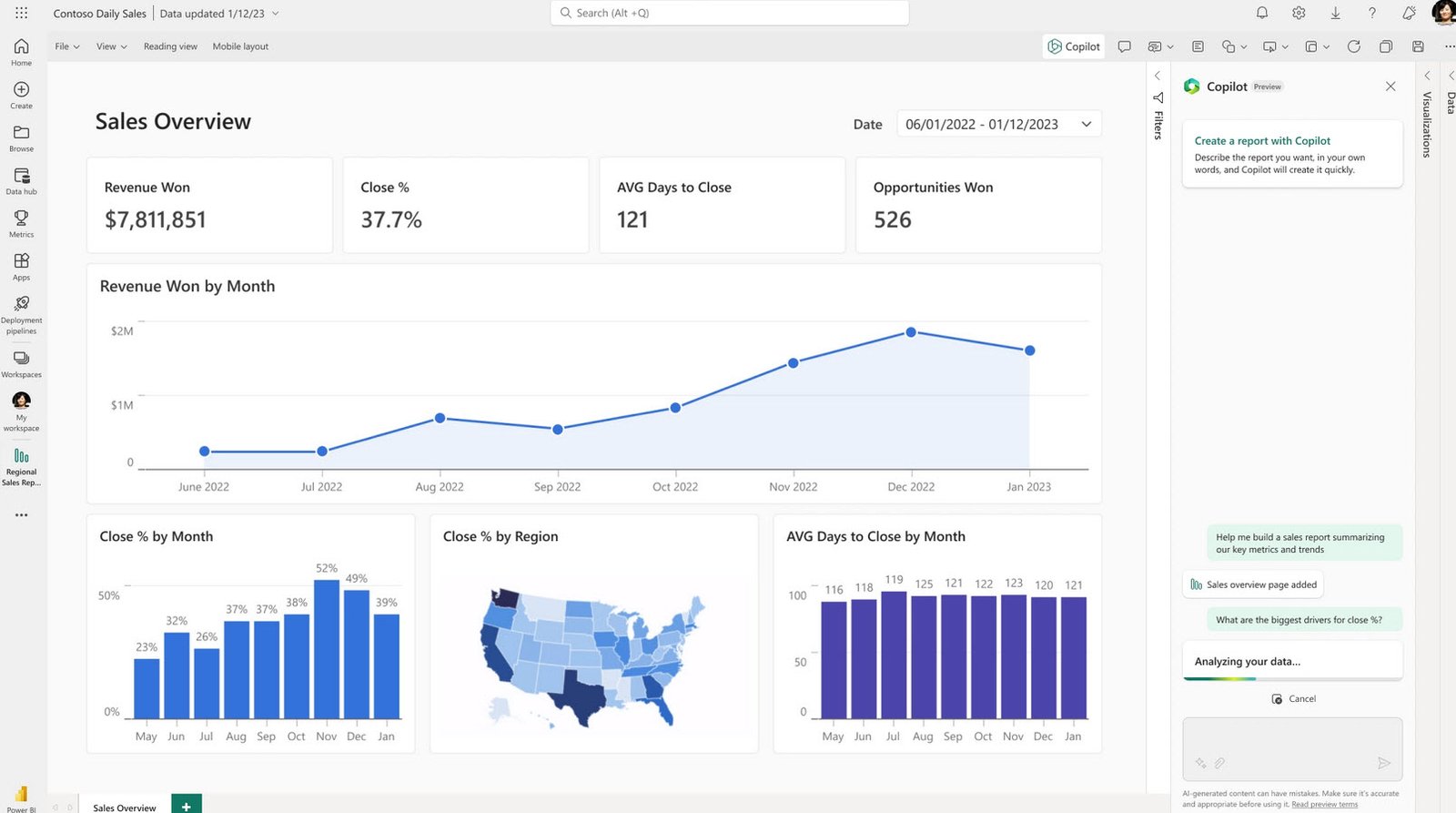
For users already working within the Microsoft ecosystem, Power BI integrates smoothly with existing applications and allows AI capabilities to be seamlessly added to data analysis across tools.
Like other tools, non-expert users can have difficulty accessing some of the more advanced features and getting the full value from the tool. Native integrations like Azure Machine Learning with Excel allow users to work within their current applications seamlessly.
Power BI can also import data from nearly any source. It is a powerful data visualization and business intelligence tool that enables users to create interactive reports and dashboards.
2. Tableau with Einstein AI
Tableau is one of the leading business intelligence platforms in the market. One of the historical frustrations of using Tableau is that while it’s very feature-rich, it’s difficult to use for new users or business users who aren’t as experienced with data.
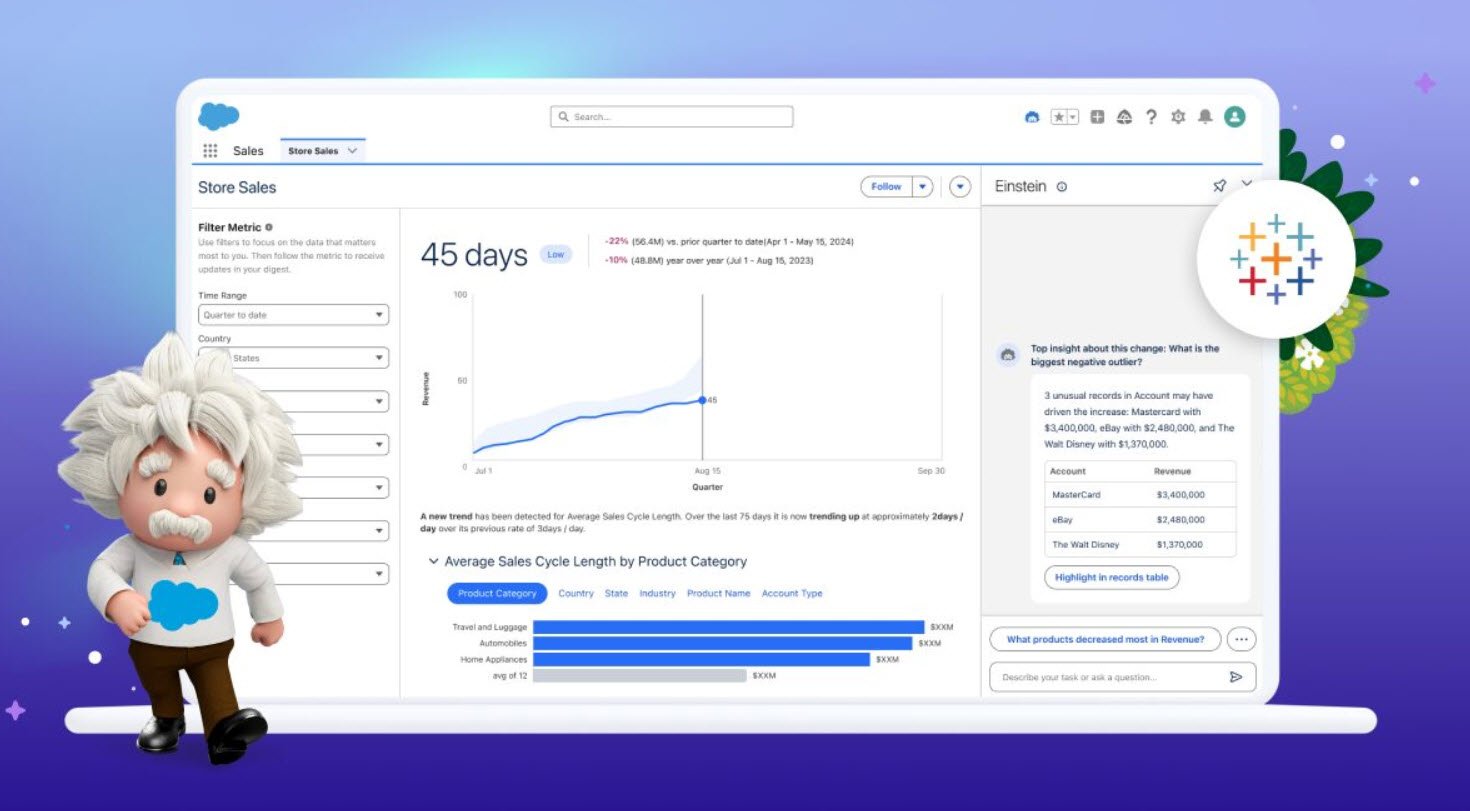
Tableau uses AI to change that and give users more intuitive and natural paths for finding answers and insights within their data.
Tableau’s AI features such as Tableau GPT and Tableau Pulse, boost data analysis, data prep, and governance by using advanced AI/ML models from Salesforce (Tableau’s parent company) and OpenAI.
3. Google Looker with AI and BigQuery ML
Google BigQuery ML (BQML) is a powerful tool that allows data scientists and analysts to build and deploy machine learning models directly within Google BigQuery.
By integrating ML into BigQuery, BQML eliminates the need to move data between various systems or platforms, enabling you to utilise data science to extract data-driven insights efficiently. This simplifies the workflow and reduces the time to develop and operationalise ML models.

4. IBM Cognos Analytics
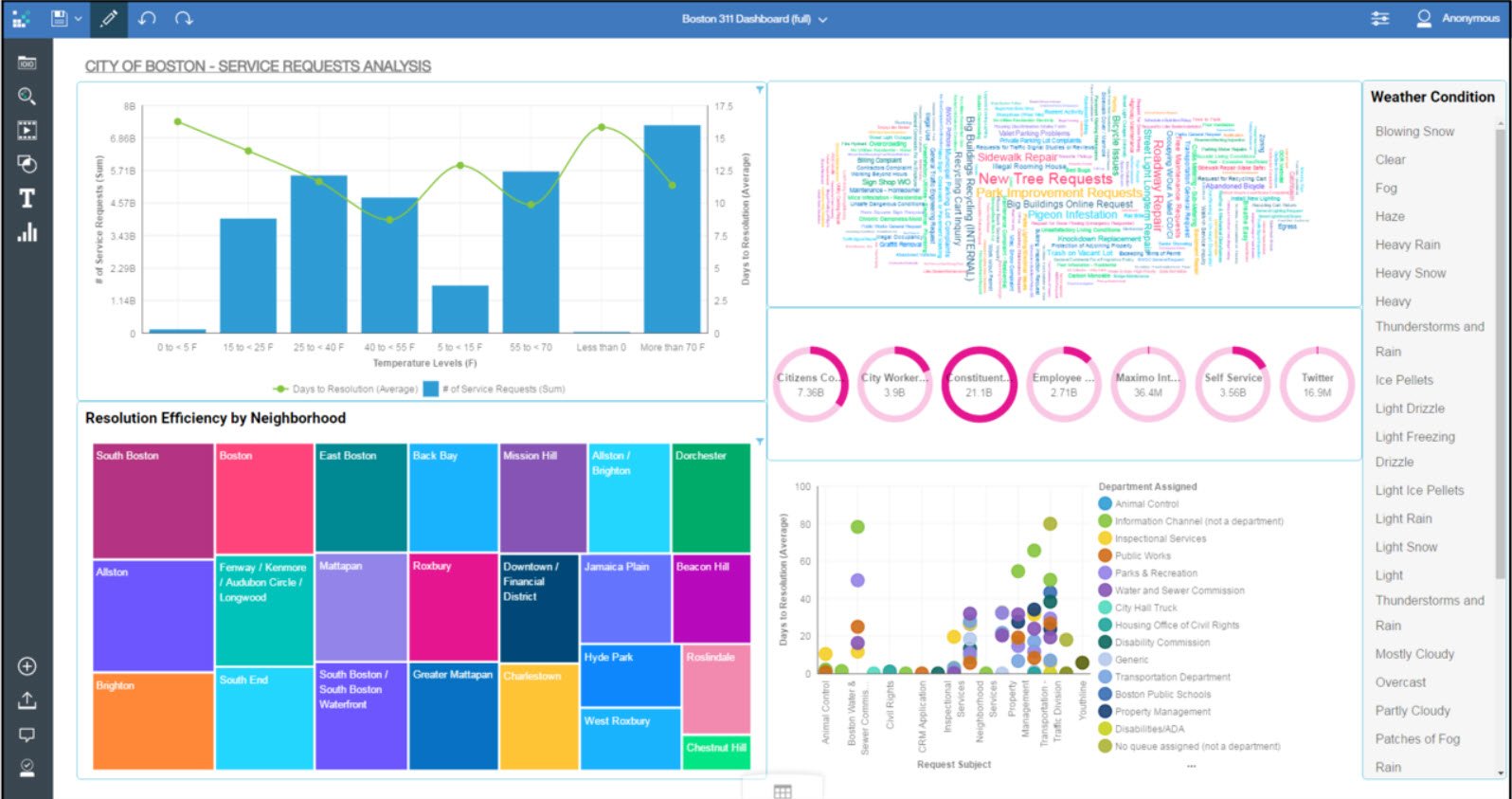
Cognos Analytics is another advanced business intelligence (BI) platform that is part of the IBM Cognos suite. It presents plenty of tools for data exploration, dashboard creation and reporting. It empowers users to unlock insights from data.
Cognos Analytics improves traditional BI capabilities through AI-driven features. These incorporate natural language queries, predictive analytics as well as automated data preparation.
This platform offers a highly user-friendly interface. It caters to technical as well as non-technical users, thus helping them to create highly visually compelling dashboards and reports. Organizations utilize Cognos Analytics to transform raw data into highly actionable insights to help drive informed decision-making.
5. Qlik Sense with AI and AutoML
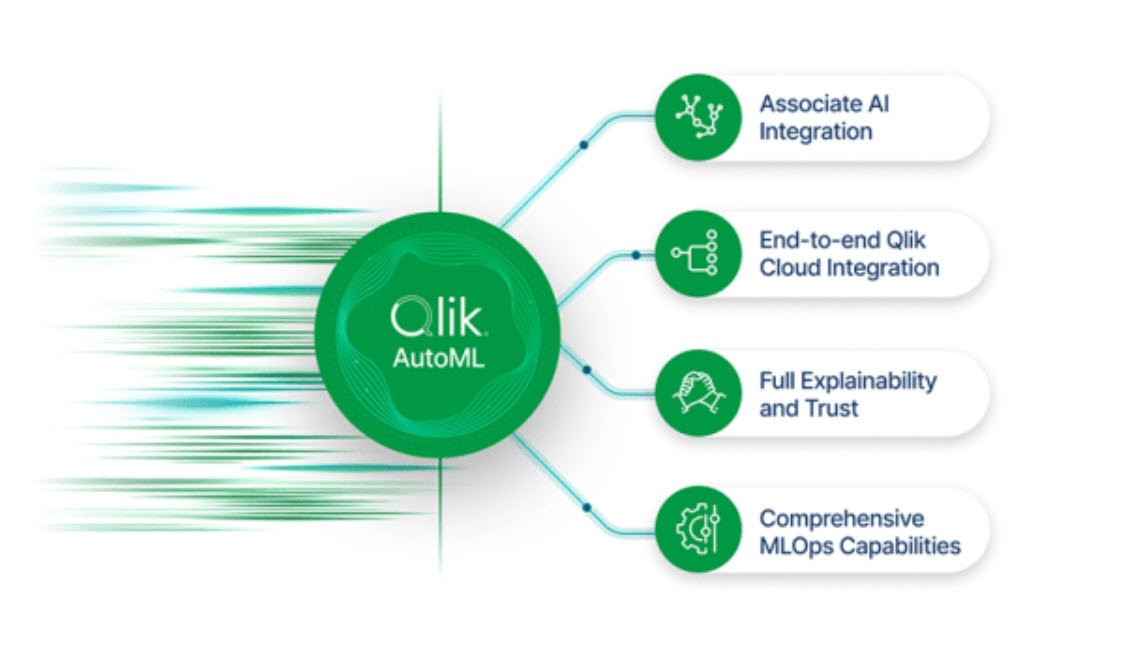
Qlik AutoML brings AI-generated machine learning models and predictive analytics directly to your organization’s analytics users and teams, in a simple yet powerful user experience focused on driving value for the vast majority of everyday use cases that are not handled by professional data scientists.
With AutoML, you can easily generate machine learning models, make predictions, and test scenarios all within an intuitive, code-free user interface.
Qlik AutoML easily profiles data, identifies key drivers in the dataset, and generates ML models you can refine and deploy. You can then make future predictions complete with prediction influencer data (Shapley values) at the record level.
Conclusion
Right AI analytics platform is the one that best aligns with your marketing data complexity, team skills, and business goals. A mid-sized agency may opt for an all-in-one solution that simplifies cross-client reporting, whereas an enterprise may mix and match tools to meet different needs.


Pingback: Top 3 Workforce Analytics Tools You Need To Know – TopatTop.com