


Augmented Reality (AR) and Virtual Reality (VR) technologies are rapidly becoming valuable tools for organizations looking to improve productivity, collaboration, training, and customer engagement. By blending digital experiences with real-world environments or creating fully immersive virtual spaces, these platforms help businesses solve operational challenges while unlocking new opportunities for innovation.
From remote collaboration and employee training to product visualization and digital twin simulations, AR and VR solutions are reshaping how enterprises work. Below are nine leading platforms helping organizations accelerate their digital transformation initiatives.
- Microsoft Mesh
- Unity Technologies
- Apple RealityKit
- PTC Vuforia
- ARToolKit
- Google ARCore
- Apple ARKit
- NVIDIA Omniverse
- Adobe Aero
1. Microsoft Mesh
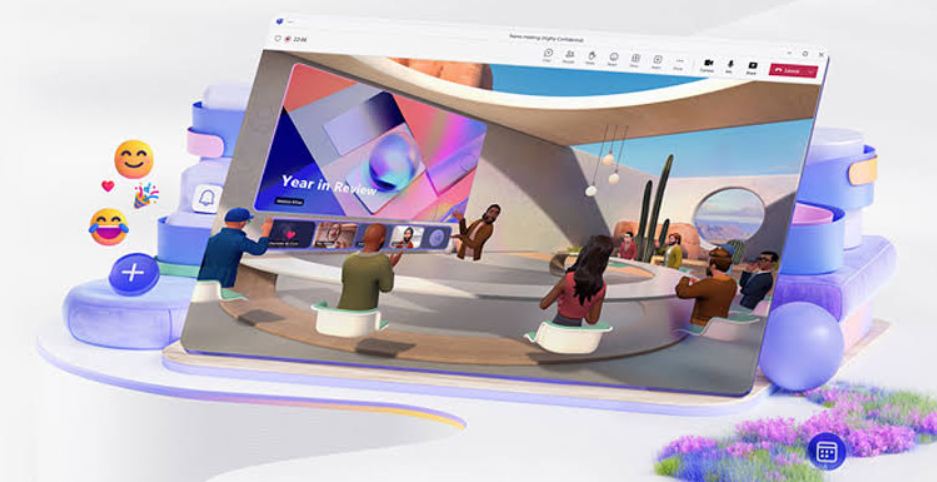
Microsoft Mesh is a mixed reality platform designed to enable immersive collaboration and virtual meetings across different devices and locations.
The platform combines virtual and augmented reality technologies to create shared digital spaces where participants can communicate and collaborate more naturally. By bringing together physical and virtual environments, Microsoft Mesh helps distributed teams interact in ways that go beyond traditional video conferencing.
2. Unity Technologies
Unity is one of the most widely used development platforms for creating interactive 2D and 3D experiences, including AR and VR applications.
The platform provides developers with specialized tools for building immersive experiences that interact intelligently with real-world environments. Its flexibility has made it a popular choice in industries such as manufacturing, automotive, retail, architecture, energy, and government.

3. Apple RealityKit
RealityKit is Apple’s framework for building advanced augmented reality experiences across its ecosystem of devices.
Designed as an AR-focused 3D framework, RealityKit enables developers to integrate digital objects into physical environments with realistic lighting, reflections, shadows, and motion effects. Apple’s continued investment in spatial computing, including support for Vision Pro, has expanded the platform’s capabilities for enterprise applications.
4. PTC Vuforia
PTC Vuforia is an enterprise-focused augmented reality platform that helps organizations create and deploy industrial AR applications.
The platform supports use cases such as workforce training, maintenance assistance, product visualization, and operational guidance. Many organizations use Vuforia to deliver contextual information to employees, making complex processes easier to understand and execute.

5. ARToolKit
ARToolKit is an augmented reality tracking library that enables developers to overlay digital content onto real-world environments.
The framework uses computer vision technology to identify markers and accurately track camera positioning. Once a marker is recognized, digital objects can be rendered in precise alignment with the physical world.
This capability makes ARToolKit particularly valuable for applications requiring accurate object placement and environmental interaction.
6. Google ARCore
Google ARCore is an augmented reality platform designed for Android devices, enabling developers to build immersive mobile AR experiences.
The platform uses motion tracking, environmental understanding, and light estimation technologies to place digital objects convincingly within real-world environments. By helping devices understand their surroundings, ARCore supports a wide range of interactive applications.

7. Apple ARKit
ARKit is Apple’s augmented reality framework that enables developers to build AR experiences for compatible iPhone and iPad devices.
The platform provides technologies such as motion tracking, scene understanding, image recognition, face tracking, and object detection. These capabilities allow developers to create applications that seamlessly blend digital content with real-world settings.
ARKit supports a variety of use cases across industries including retail, education, entertainment, and workplace productivity.
8. NVIDIA Omniverse
NVIDIA Omniverse is a real-time 3D collaboration and simulation platform that connects teams, applications, and design tools into a shared digital environment.
Built on Universal Scene Description (USD) technology, Omniverse allows multiple users to work simultaneously on complex 3D projects while keeping data synchronized across connected tools. This helps eliminate common collaboration issues such as version conflicts and incompatible file formats.

9. Adobe Aero
Adobe Aero is an augmented reality authoring platform that allows users to create interactive AR experiences without extensive programming knowledge.
Available through Adobe Creative Cloud, the platform enables designers and creators to build, test, and publish immersive experiences using a visual interface. Its ease of use makes AR development more accessible for teams that may not have dedicated software engineering resources.

Conclusion
AR and VR technologies are moving beyond experimental projects and becoming important tools for enterprise innovation.
Whether the goal is improving workforce training, enabling virtual collaboration, developing digital twins, or creating engaging customer experiences, these AR/VR platforms offer powerful foundations for the next generation of enterprise applications.