


As businesses generate increasing amounts of data from connected devices, sensors, machines, and applications, the need for faster data processing has become more important than ever. Traditional cloud computing often requires information to travel long distances before it can be analyzed, creating potential challenges related to latency, bandwidth consumption, and connectivity.
Edge computing addresses these challenges by processing data closer to where it is created. By moving computing capabilities nearer to devices and users, organizations can achieve faster response times, improve operational efficiency, and support real-time decision-making.
From industrial automation and smart cities to artificial intelligence and Internet of Things (IoT) deployments, edge computing platforms are becoming a critical part of modern technology infrastructure.
Here are eight platforms helping drive this transformation.
- AWS IoT Greengrass
- Microsoft Azure IoT Edge
- Google Distributed Cloud Edge
- IBM Edge Application Manager
- Cisco Edge Intelligence
- Red Hat OpenShift Edge
- VMware Edge Compute Stack
- Oracle Roving Edge Infrastructure
1. AWS IoT Greengrass
AWS IoT Greengrass is Amazon Web Services’ edge runtime designed to bring cloud functionality directly to connected devices. It enables local data processing, application execution, and device communication even when internet connectivity is unreliable or temporarily unavailable.
One of its key advantages is the ability to synchronize with AWS cloud services when connectivity is restored. This allows organizations to combine the benefits of local processing with centralized cloud management.
The platform supports capabilities such as machine learning inference, secure messaging, and device management, making it suitable for a wide range of IoT applications.
2. Microsoft Azure IoT Edge
Microsoft Azure IoT Edge enables organizations to deploy cloud workloads directly onto edge devices while maintaining integration with Azure services.
Businesses can run artificial intelligence models, custom applications, Azure services, and third-party workloads locally, reducing the need to send large volumes of data to the cloud for processing.
This approach helps lower latency, reduce bandwidth requirements, and support operations in environments where internet connectivity may be limited. Common use cases include predictive maintenance, anomaly detection, and real-time analytics.
3. Google Distributed Cloud Edge
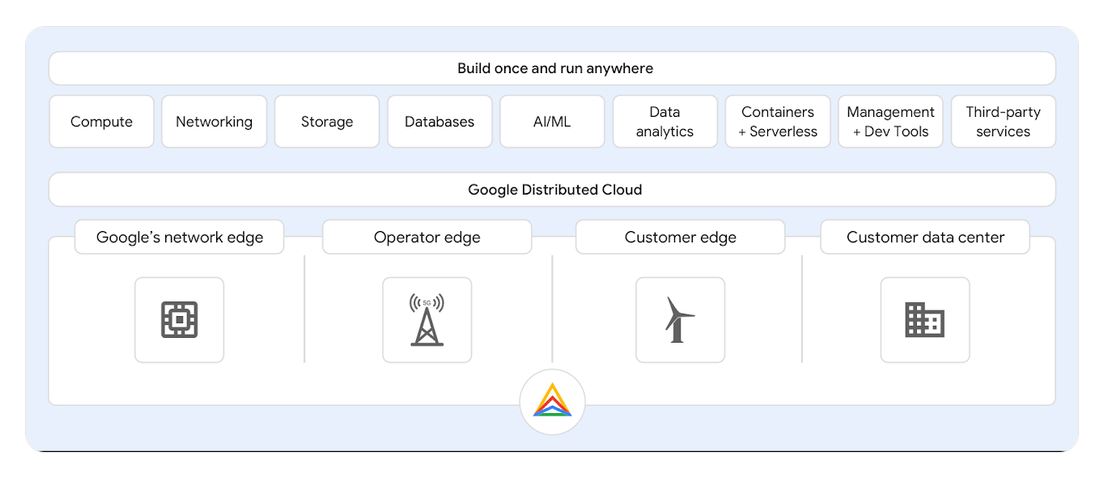
Google Distributed Cloud Edge extends Google Cloud capabilities beyond traditional data centers by delivering infrastructure and services closer to operational environments.
The platform combines managed hardware and software with Google’s Kubernetes expertise, helping organizations deploy and manage applications near the source of data generation.
A notable feature is its availability in both connected and air-gapped environments, allowing businesses to support operations that require varying levels of network connectivity while maintaining a consistent cloud experience.
4. IBM Edge Application Manager
IBM Edge Application Manager is designed to simplify large-scale edge deployments through automation and centralized management.
The platform allows organizations to deploy and manage workloads across distributed edge devices and remote Kubernetes environments. It is particularly focused on reducing operational complexity and minimizing the risks associated with managing a large number of edge nodes.
Its autonomous management capabilities help organizations maintain software lifecycles and deploy updates efficiently across geographically dispersed environments.
5. Cisco Edge Intelligence
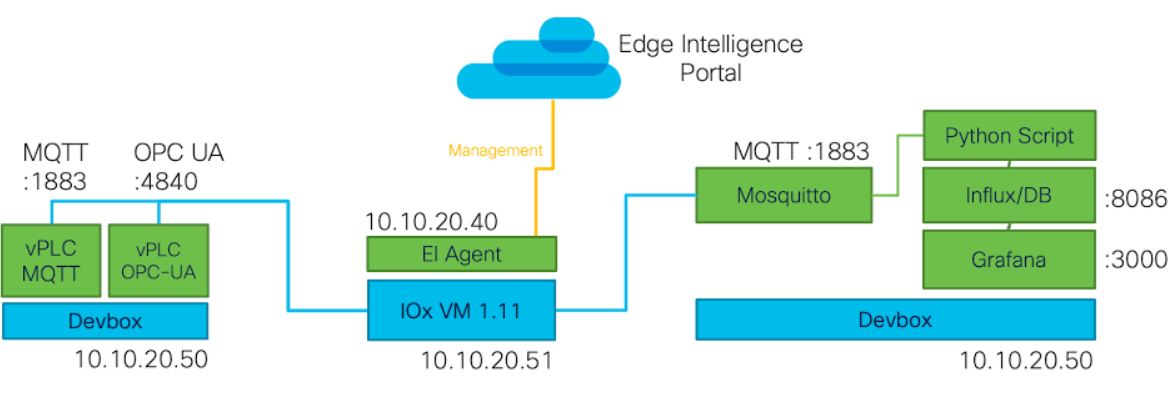
Cisco Edge Intelligence helps organizations securely move and manage data between connected devices and cloud applications.
Integrated with Cisco’s networking and industrial infrastructure technologies, the platform is designed to simplify the collection, transformation, and delivery of edge-generated data. This enables businesses to gain more value from information produced by connected devices while maintaining control over governance and security.
The platform’s visual interface and integration capabilities support easier deployment and management of data-driven edge applications.
6. Red Hat OpenShift Edge
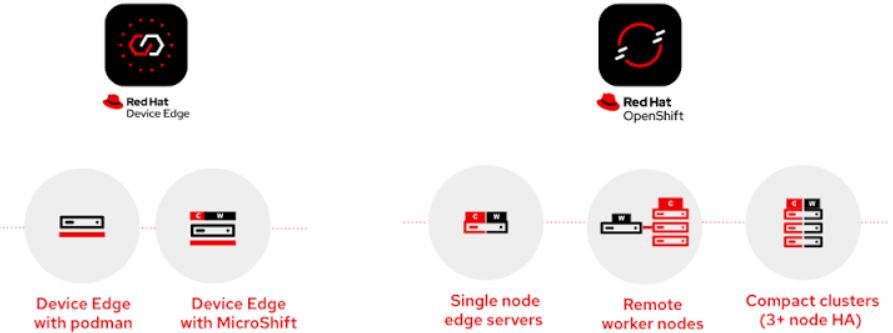
Red Hat OpenShift Edge extends the OpenShift ecosystem to support edge computing environments, including resource-constrained devices operating at remote locations.
The platform provides a consistent operational framework across cloud, data center, and edge environments. Organizations can use it to develop, deploy, and manage applications through a unified approach, regardless of where workloads run.
Automation features for provisioning, orchestration, and lifecycle management help streamline edge deployments and reduce administrative overhead.
7. VMware Edge Compute Stack
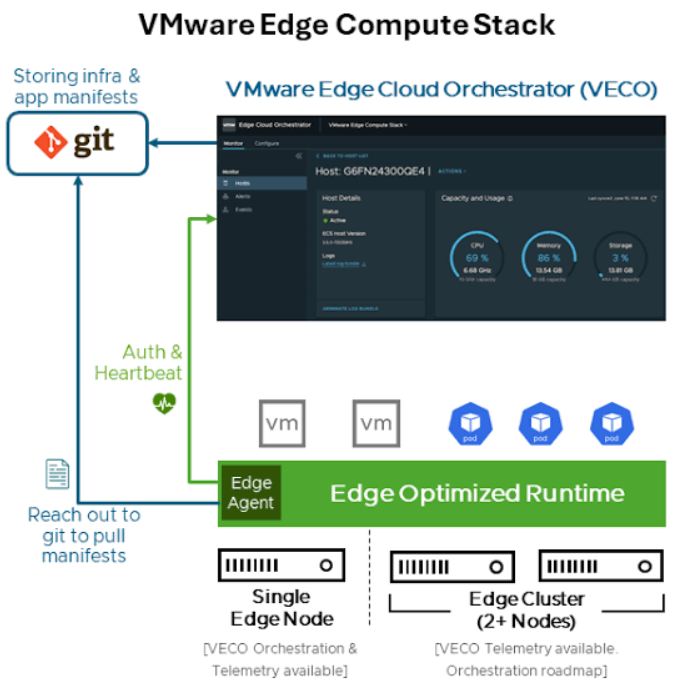
VMware Edge Compute Stack combines virtualization, container management, storage, networking, and observability tools into a single edge-focused platform.
Built to support virtual machine and container-based workloads, the solution leverages VMware technologies such as vSphere, vSAN, and Tanzu to simplify deployment and management.
A centralized management model enables organizations to oversee distributed edge infrastructure while maintaining consistency across multiple locations. This approach supports modern applications that require scalable and flexible edge resources.
8. Oracle Roving Edge Infrastructure
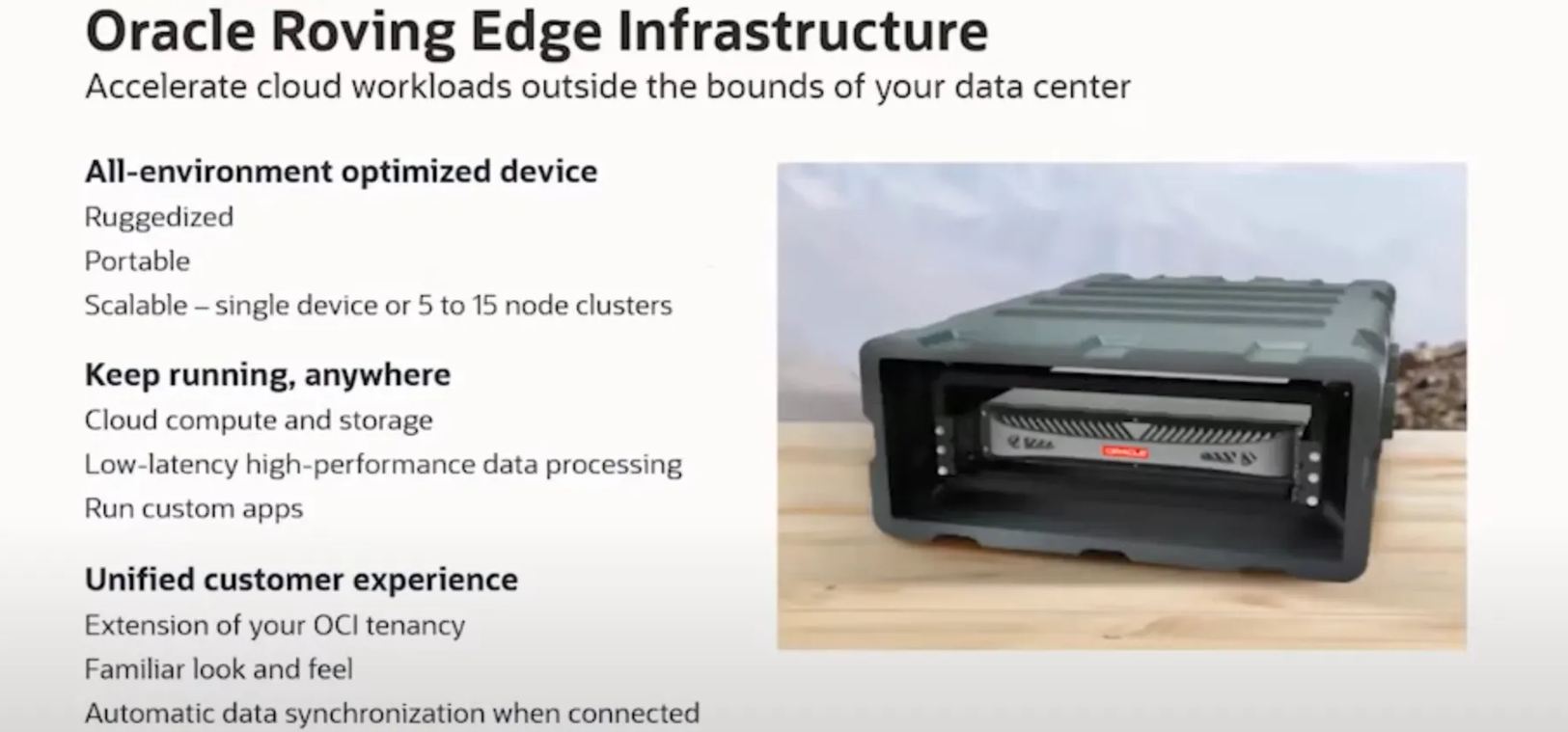
Oracle Roving Edge Infrastructure is built to bring cloud-powered computing capabilities to locations where connectivity may be intermittent or unavailable.
The platform provides local computing and storage resources that support workloads such as analytics, machine learning, and location-based services. It integrates with Oracle Cloud Infrastructure while allowing organizations to operate applications closer to where data is generated.
By reducing the distance between data collection and processing, Oracle’s solution helps deliver faster insights and lower-latency performance for time-sensitive operations.
Conclusion
Edge computing is transforming how organizations process and act on data by bringing computing resources closer to the source of information.
Rather than focusing solely on vendor reputation, businesses should evaluate how well a platform aligns with their operational requirements, application workloads, connectivity constraints, and long-term technology strategy.
Selecting the right edge computing platform can help organizations unlock faster insights, improve efficiency, and prepare for the next generation of connected technologies.