


Understanding how visitors interact with your website is essential for improving user experience and increasing conversions. While traditional analytics tools show what users do, heatmap tools help you visualize how they behave by tracking clicks, scrolling patterns, mouse movements, and other on-page interactions.
Whether you’re optimizing a landing page, improving navigation, or identifying conversion barriers, the right heatmap tool can provide valuable insights. Here are seven of the most popular heatmap tools for studying user behavior and enhancing website performance.
- Hotjar
- Crazy Egg
- Mouseflow
- Lucky Orange
- FullStory
- Inspectlet
- Microsoft Clarity
1. Hotjar
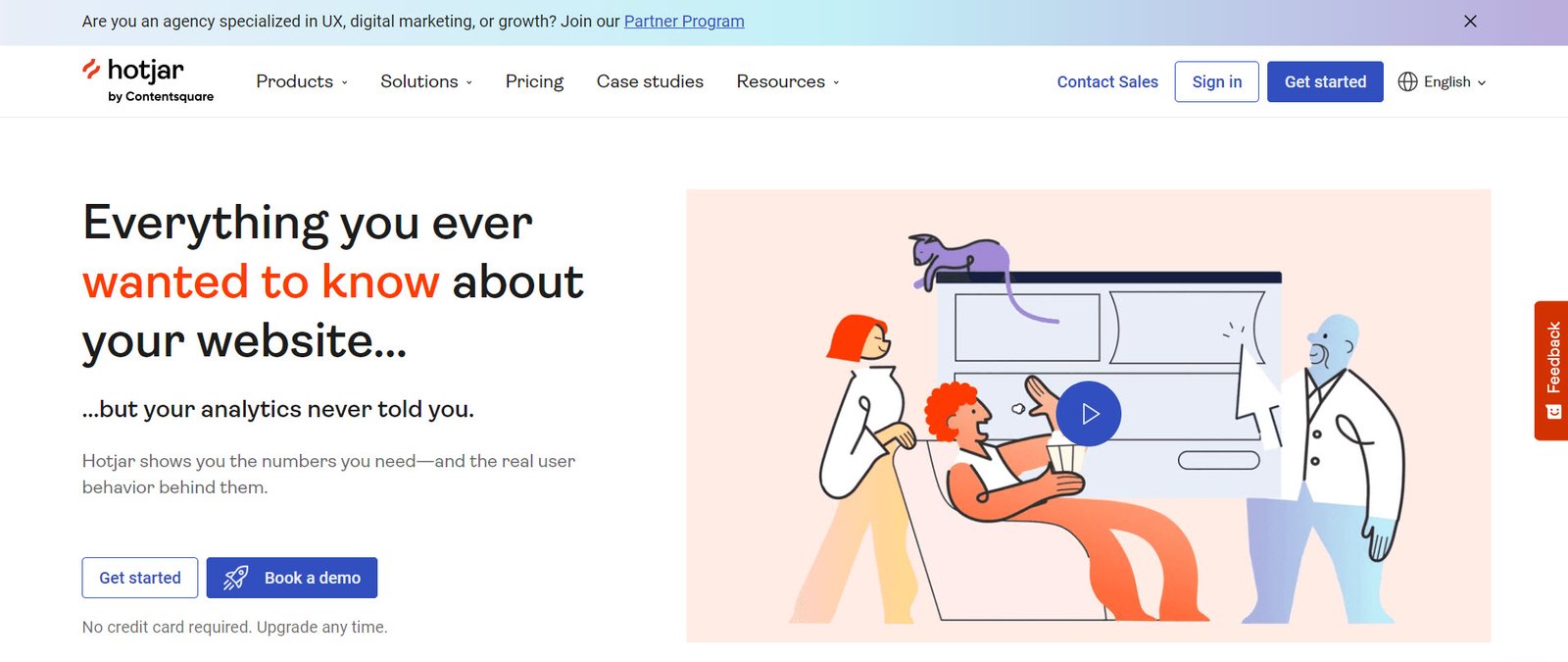
Hotjar is a user experience (UX) analytics platform that helps businesses understand how visitors interact with their websites. It goes beyond standard analytics by revealing user behaviors that may not result in direct clicks or conversions.
Hotjar helps teams uncover friction points that traditional analytics may miss. By identifying where users hesitate, change direction, or stop engaging, businesses can make more informed decisions to improve website usability and performance.
2. Crazy Egg
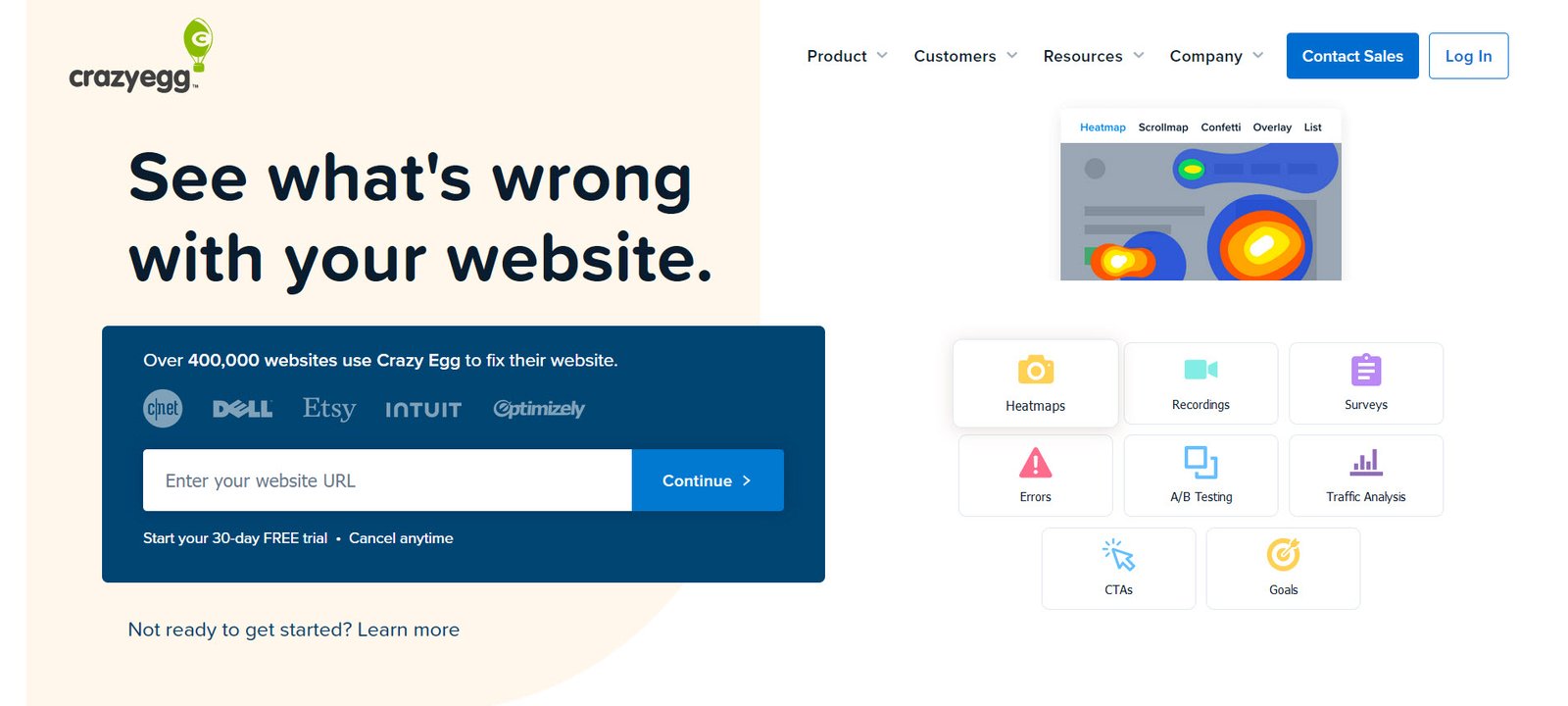
Crazy Egg is a website analytics tool best known for its visual heatmaps and traffic segmentation capabilities. It helps website owners understand how different visitors engage with content and page elements.
Its standout Confetti feature allows businesses to see how visitors from search engines, social media, and other traffic channels behave differently. This can help marketers fine-tune content and campaigns based on user engagement patterns.
3. Mouseflow
Mouseflow is a user behavior analytics platform designed to help businesses gain deeper insights into how people navigate their websites. It combines multiple analysis tools in a single platform.
Mouseflow is particularly useful for understanding the complete customer journey. Its automated setup and broad feature set make it suitable for both small businesses and larger organizations looking to optimize conversions.

4. Lucky Orange
Lucky Orange is a conversion optimization tool that combines heatmaps, visitor recordings, and feedback tools to help businesses improve website experiences.
The platform provides both behavioral data and direct user feedback, making it easier to identify usability issues and opportunities for improvement. Its real-time insights can be especially valuable for ecommerce businesses seeking to optimize customer interactions.

5. FullStory
FullStory is a digital experience analytics platform used by product, marketing, support, and development teams. It focuses on helping organizations understand and improve online customer experiences.
FullStory helps teams connect user behavior with business outcomes. Its combination of analytics, replay tools, and troubleshooting capabilities makes it valuable for organizations looking to enhance website performance and customer satisfaction.

6. Inspectlet
Inspectlet is a website analytics and user behavior tracking platform that provides detailed insights through recordings and interactive heatmaps.
Unlike tools that rely on static page snapshots, Inspectlet overlays heatmap data onto a live version of the page. This approach helps maintain accuracy on websites where content changes dynamically, making it a strong option for modern web applications.

7. Microsoft Clarity
Microsoft Clarity is a free website analytics tool that focuses on visualizing user behavior through heatmaps and session replays. It is designed to help website owners identify usability issues and opportunities for improvement.
Microsoft Clarity is a great choice for businesses looking for an accessible and cost-effective way to understand visitor behavior. Its visual reports make it easy to identify user frustrations, navigation problems, and areas that may benefit from optimization.

Conclusion
Heatmap tools make it easier to understand how visitors interact with your website, helping you identify usability issues, improve page layouts, and optimize conversion rates.
The best choice depends on your business goals, website complexity, integration requirements, and analytics needs. By using the right heatmap solution, you can make data-driven improvements that create a better user experience and drive stronger results.